Hair Transplant: Procedure, Cost, Benefits & Everything You Need to Know
Hair loss is one of the most common concerns affecting both men and women today. From receding hairlines to thinning crowns, the impact of baldness is not just physical but also emotional. A hair transplant has emerged as one of the most effective, long-term solutions for restoring natural hair growth. In this blog, we’ll explore everything you need to know about hair transplant – types, procedure, cost, benefits, risks, and results.
What is a Hair Transplant?
A hair transplant is a surgical procedure that involves moving healthy hair follicles from the donor area (usually the back or sides of the scalp) to bald or thinning areas. Unlike temporary solutions such as wigs or hair systems, a hair transplant offers a permanent and natural-looking solution.
Types of Hair Transplant Procedures
1. Follicular Unit Transplantation (FUT)
Also called the strip method.
A strip of scalp is removed from the donor area, and hair follicles are extracted and implanted into bald areas.
Pros: Higher graft yield, cost-effective.
Cons: Leaves a linear scar, longer recovery.
2. Follicular Unit Extraction (FUE)
Individual hair follicles are extracted using micro punches.
Advanced version of FUE where follicles are directly implanted using a pen-like tool.
Pros: High precision, quick recovery, no visible scars.
Cons: Costlier than FUT and FUE.
✅ Comparison Table (FUT vs FUE vs DHI) can be added for better user engagement.
Who is an Ideal Candidate?
Not everyone experiencing hair loss is a good candidate. The ideal candidate is someone who:
Has male or female pattern baldness.
Has a sufficient donor area with healthy hair.
Is generally healthy with no severe scalp conditions.
Is above 25 years of age.
Step-by-Step Hair Transplant Procedure
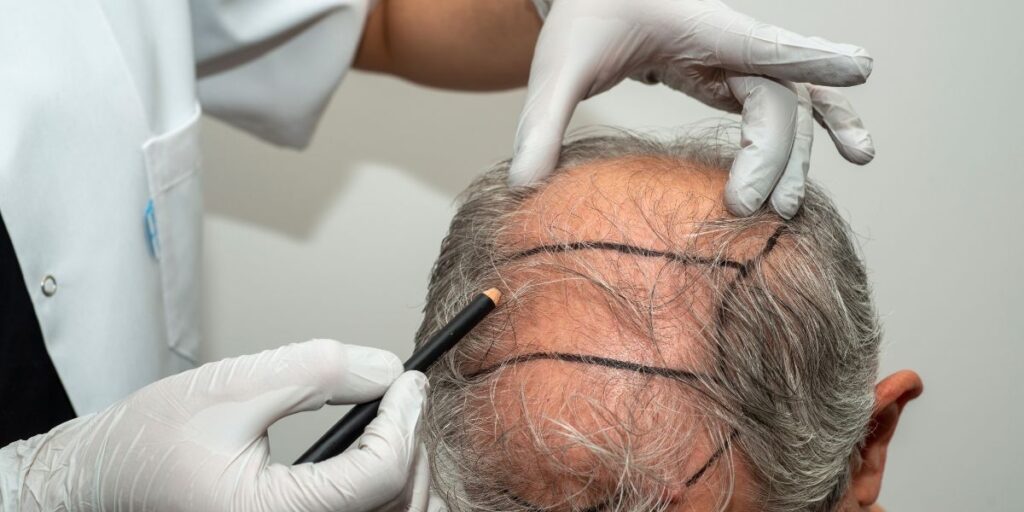
onsultation & Scalp Analysis – The surgeon examines your scalp, hair density, and hair loss pattern.
Pre-surgery Preparation – Blood tests, medical clearance, and shaving the donor area if required.
Anesthesia – Local anesthesia is applied for a pain-free experience.
Extraction of Follicles – FUT/FUE/DHI method is chosen.
Implantation – Extracted grafts are implanted into the recipient area.
Duration – The process usually takes 6–8 hours depending on the number of grafts.
Recovery and Aftercare
First Week: Mild swelling, redness, and scabbing.
1–3 Months: Temporary hair shedding (shock loss).
3–6 Months: New hair starts growing.
9–12 Months: Full results become visible.
Aftercare Tips:
Avoid scratching or touching the scalp.
Sleep with head elevated.
Avoid smoking, alcohol, and heavy workouts for 2 weeks.
Follow doctor’s prescribed medicines.
Benefits of Hair Transplant
Permanent and natural-looking results.
Boosts self-confidence and self-esteem.
Low maintenance compared to wigs or artificial hair systems.
Safe and effective when performed by an expert surgeon.
Risks and Side Effects
Like any surgical procedure, hair transplant has some risks:
Temporary pain or swelling.
Infection (rare if proper care is taken).
Shock loss.
Scarring in FUT procedure.
Hair Transplant Cost in India
The cost depends on several factors such as the technique used, surgeon’s expertise, and number of grafts required.
Average Cost per Graft in India: ₹25 – ₹60.
Overall Cost Range: ₹40,000 – ₹2,00,000.
International Costs: In the US/UK, it can range from $4,000 – $15,000, making India a preferred destination for affordable and quality hair transplants.
Results and Success Rate
Hair transplant success rate is around 90–95% when performed by experienced surgeons.
Results are permanent, as transplanted follicles are resistant to hair loss.
Final outcome depends on donor area quality, technique, and aftercare.
Common Myths About Hair Transplant
Myth: Hair transplant is painful. Fact: Local anesthesia makes the procedure almost painless.
Myth: Only men can get a hair transplant. Fact: Women with hair thinning are also eligible.
Myth: Results are immediate. Fact: Visible growth takes 6–12 months.
Alternatives to Hair Transplant
If you’re not ready for surgery, there are alternatives:
PRP Therapy (Platelet-Rich Plasma).
Medications (Minoxidil & Finasteride).
Laser Therapy.
Hair Systems or Wigs.
How to Choose the Right Hair Transplant Clinic
Check the surgeon’s qualification & experience.
Review before & after patient photos.
Ensure the clinic uses modern techniques & equipment.
Look for genuine patient reviews and testimonials.
A hair transplant is one of the most reliable and effective treatments for permanent hair restoration. While it requires patience to see full results, the outcome is natural-looking and life-changing. If you are considering this procedure, consult an experienced hair transplant surgeon to determine the right approach for you.